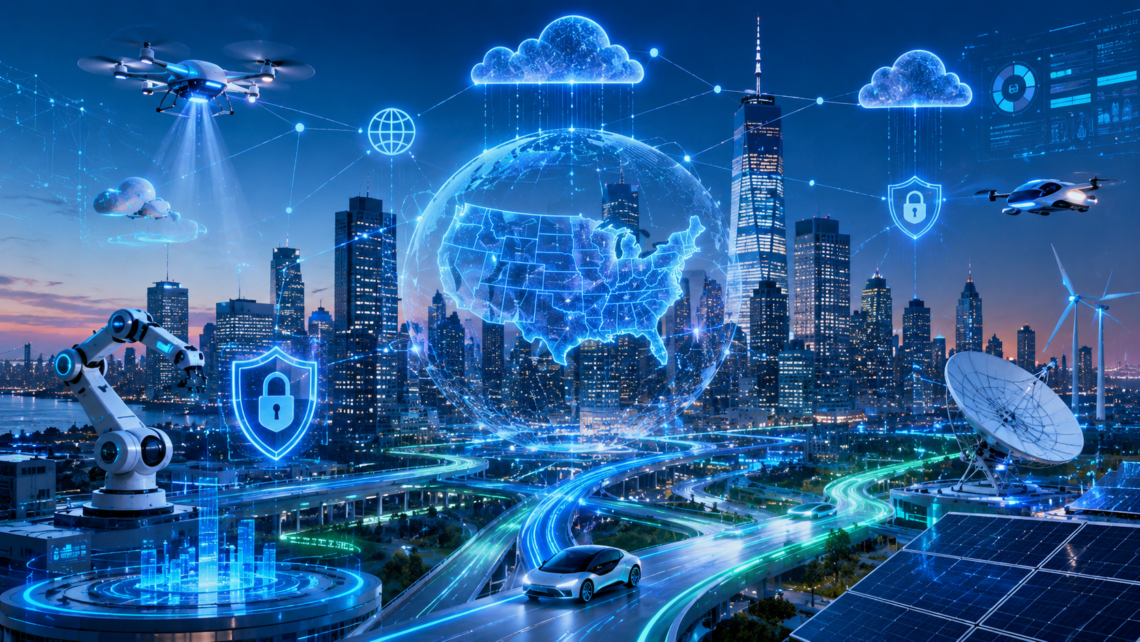
Droven.io future technology USA represents the intersection of cutting-edge artificial intelligence, automation, cloud computing, cybersecurity, robotics, and digital transformation shaping industries across the United States. This concept is not limited to a single software or tool but encompasses an entire ecosystem of emerging technologies driving business innovation, operational efficiency, and workforce transformation. Droven.io, as a platform, has become an authoritative source for exploring these trends, providing insight into AI, machine learning, digital twins, and automation systems, all while highlighting real-world applications in the US market.
The platform focuses on translating complex technical concepts into actionable knowledge for business leaders, developers, and technology enthusiasts. Its content covers generative AI, task-specific AI agents, multi-agent systems, cloud strategies, cybersecurity best practices, and physical AI in robotics. By connecting these domains, Droven.io enables readers to understand the practical implications of future technologies and how they are already reshaping American business, infrastructure, and everyday life.
The Rise of Artificial Intelligence in America
Artificial intelligence has emerged as the central force in future technology for the USA. Today, AI extends far beyond chatbots or content creation tools; it is now integrated into enterprise software, business analytics, financial services, healthcare, and even public infrastructure. Generative AI, predictive modeling, and intelligent automation are enabling companies to analyze vast amounts of data, automate repetitive tasks, optimize operations, and enhance decision-making processes.
In the US, businesses are rapidly adopting AI-powered solutions to improve customer experiences, reduce operational costs, and maintain competitiveness. From AI-driven healthcare diagnostics to fraud detection in banking and personalized marketing strategies, AI applications are increasingly diverse. Beyond functional gains, the focus has shifted to responsible AI, ensuring ethical deployment, transparency, bias mitigation, and data privacy. This makes AI adoption not only a technological shift but also a governance and compliance challenge.
Cloud Computing and Edge Integration
Cloud computing forms the backbone of digital transformation in the United States. Cloud infrastructure provides scalable storage, computational power, and flexibility, allowing companies to host AI models, automate workflows, and manage distributed applications efficiently. It has become a critical enabler of Droven.io’s vision of future technology, supporting enterprise-level adoption of intelligent systems.
Edge computing complements the cloud by processing data closer to its source, reducing latency and enabling real-time decision-making. IoT devices, autonomous vehicles, smart factories, and industrial sensors generate massive data streams that require both cloud scalability and edge responsiveness. In combination, cloud and edge computing support seamless integration of AI, data analytics, and operational automation across industries, creating an intelligent and responsive digital ecosystem in the USA.
Robotic Automation and Physical AI
Physical AI, including robotics and automation, represents a tangible dimension of future technology. In American manufacturing, logistics, healthcare, and construction, robots equipped with AI-driven vision, sensors, and control systems are increasingly performing complex tasks with precision and efficiency. These systems reduce human error, enhance safety, and optimize throughput, particularly in environments that require high consistency and repeatability.
Digital twins—virtual replicas of physical systems—have become indispensable for modeling, simulation, and predictive maintenance. They allow organizations to anticipate system failures, optimize processes, and experiment with design changes without risking real-world disruption. By combining robotics, digital twins, and AI, US companies can simulate, monitor, and control physical operations while improving reliability and reducing operational costs.
Cybersecurity and Digital Trust
As technology becomes more integrated, cybersecurity emerges as a fundamental requirement. Future technology adoption in the USA hinges on the ability to protect sensitive data, secure networks, and defend against increasingly sophisticated cyber threats. AI-enhanced cybersecurity platforms now detect anomalies, automate threat responses, and anticipate potential breaches in real-time.
Simultaneously, the risk landscape is evolving. Malicious actors employ AI to create more sophisticated attacks, including automated phishing, deepfakes, and malware capable of evading traditional defenses. For organizations, this dual-use nature of AI emphasizes the importance of proactive cybersecurity, including identity management, anomaly detection, encrypted communications, and continuous monitoring, ensuring that innovation does not compromise safety or trust.
AI Governance and Ethical Oversight
The rapid proliferation of AI technologies necessitates strong governance frameworks to ensure ethical and responsible deployment. US organizations increasingly adopt structured approaches to AI risk management, leveraging frameworks like the NIST AI Risk Management Framework to guide development, deployment, and auditing processes. Effective governance addresses transparency, accountability, bias mitigation, and human oversight, fostering trust in AI systems.
By prioritizing governance, businesses ensure compliance with emerging regulations, mitigate operational and reputational risks, and enhance user confidence. Responsible AI deployment also aligns with broader societal expectations, ensuring that automation, predictive modeling, and intelligent systems enhance productivity without undermining fairness or accountability.
Workforce Transformation and Future Skills
The integration of AI, automation, and advanced digital tools is reshaping the US workforce. While repetitive tasks are increasingly automated, demand for skilled professionals in AI engineering, cloud computing, cybersecurity, data analytics, and digital strategy continues to grow. Careers now emphasize hybrid skills that combine technical knowledge with business acumen, ethical oversight, and decision-making capabilities.
Employees and students entering the technology ecosystem are encouraged to develop proficiency in AI tools, cloud platforms, automation workflows, cybersecurity principles, and data analytics. Organizations that invest in workforce upskilling and continuous learning gain a competitive advantage, ensuring that human talent complements emerging technologies rather than being displaced by them.
Business Applications and Strategic Implementation
For companies, successful adoption of future technology requires careful planning, alignment with strategic objectives, and measurable outcomes. Identifying operational challenges—such as inefficient workflows, manual data processing, or cybersecurity vulnerabilities—guides targeted investment in AI, cloud, and automation technologies. Pilot programs, controlled deployment, and rigorous performance monitoring ensure technology delivers tangible business value.
Integrating these systems also demands human oversight. Employees must understand AI outputs, verify automated decisions, and maintain ethical standards. Businesses that embrace a balanced approach to digital transformation achieve increased efficiency, stronger risk management, and sustainable innovation, reinforcing the long-term benefits of future technology.
Emerging Trends and The Road Ahead
The horizon for Droven.io future technology USA continues to expand, with trends such as AI supercomputing, multi-agent systems, physical AI integration, digital twins, and next-generation cloud platforms gaining prominence. Quantum computing and generative AI promise to further accelerate capabilities, offering new ways to optimize business operations, enhance predictive analytics, and automate complex workflows.
Organizations and professionals who proactively understand these technologies, integrate them responsibly, and align them with business strategy are best positioned to thrive in this evolving landscape. The combination of innovation, trust, and skilled human oversight ensures that America’s adoption of future technology will remain robust, ethical, and transformative in the years ahead.