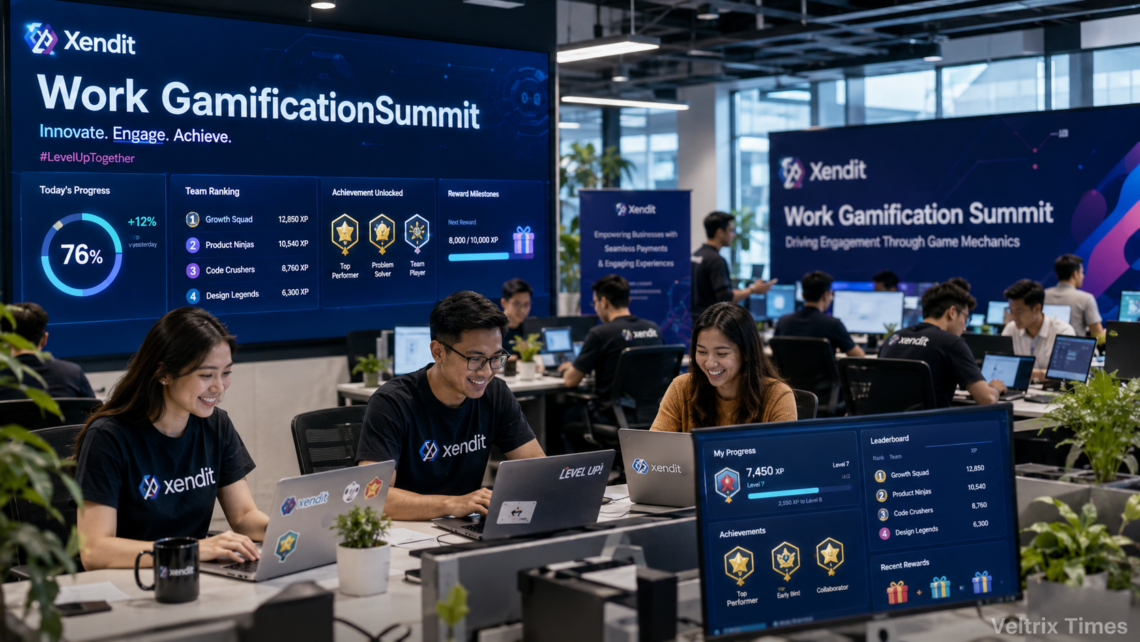
Introduction to Xendit Work GamificationSummit and Modern Workplace Innovation
The concept of Xendit Work GamificationSummit represents a modern interpretation of how fintech companies are reshaping employee engagement, productivity systems, and workplace motivation strategies. While it is not always defined as a single formal event, it is widely discussed as a framework that combines Xendit’s innovation-driven work culture with gamification principles used in digital workplaces.
In today’s competitive fintech environment, companies like Xendit operate in fast-moving markets where employee performance, speed of execution, and engagement are critical. Traditional performance systems often fail to maintain long-term motivation, which is why gamification-based workplace models are increasingly studied and adopted.
The idea behind this concept is to transform work into a structured, game-like experience where employees feel progress, recognition, and achievement in real time. This article explores how the model works, its origins, benefits, and its growing relevance in modern digital organizations.
Understanding Xendit as a Fintech Innovation Ecosystem
Xendit is widely recognized as a digital payments infrastructure company that supports businesses across Southeast Asia with payment processing, online transactions, and financial APIs. Within this ecosystem, innovation is not limited to technology but also extends to workplace culture and employee performance systems.
The idea of a “Work GamificationSummit” emerges from discussions around how fintech companies like Xendit maintain high performance standards while keeping employees motivated. In high-growth environments, employees deal with complex tasks, strict deadlines, and evolving customer needs, which requires more than traditional management systems.
To address this, companies adopt engagement frameworks that resemble gamified systems. These systems focus on visibility, achievement tracking, and continuous feedback. The result is a workplace environment where employees can clearly see their contribution to business growth and progress.
The Concept of Gamification in Work Environments
Gamification in the workplace refers to the use of game mechanics such as points, levels, achievements, and rewards in non-game settings. In the context of Xendit Work GamificationSummit, this idea is applied to employee workflows, performance tracking, and team collaboration systems.
The purpose of gamification is not to turn work into entertainment but to improve motivation and engagement. Employees are more likely to stay focused when they can see measurable progress in their work. This creates a psychological reward loop that reinforces productivity and consistency.
In modern digital companies, gamification also helps reduce monotony in repetitive tasks. By introducing structured milestones and performance feedback, employees feel a stronger sense of purpose in their daily responsibilities, which leads to improved overall output.
How the Work GamificationSummit Model Operates in Practice
The Xendit Work GamificationSummit concept is often described as a structured framework where employees experience work as a progressive journey. Instead of static job roles, employees move through levels of achievement based on performance, contribution, and collaboration.
This system typically integrates digital dashboards, performance tracking tools, and real-time feedback mechanisms. Employees can view their progress, understand their strengths, and identify areas for improvement without waiting for periodic reviews.
The “summit” idea symbolizes growth and advancement. It represents the journey employees take as they move toward higher performance stages. This structure helps create a sense of direction and long-term engagement within the organization.
Psychological Impact of Gamification on Employee Behavior
One of the key reasons gamification works in workplace environments is its psychological impact. Human behavior naturally responds to reward systems, progress indicators, and structured goals. When these elements are applied to work, employees experience increased motivation and focus.
In the context of Xendit Work GamificationSummit, employees are encouraged to complete tasks not just for external rewards but for internal satisfaction derived from visible progress. This creates a sense of achievement even in routine tasks.
The system also supports habit formation. When employees consistently engage with structured goals and feedback loops, productivity becomes a natural behavior rather than a forced requirement. Over time, this leads to stronger performance culture and improved workplace satisfaction.
Role of Data and Performance Analytics in Gamified Work Systems
Data plays a central role in modern gamified workplace systems. In fintech environments like Xendit, performance is often measured through real-time analytics that track output, efficiency, and collaboration.
The Work GamificationSummit model integrates these data systems into employee experiences. Instead of static evaluations, employees receive continuous feedback based on measurable performance indicators. This helps create transparency and fairness in performance assessment.
At the organizational level, leaders use this data to understand team dynamics, identify productivity trends, and make informed decisions. This data-driven approach ensures that gamification is not just motivational but also strategically aligned with business goals.
Employee Engagement and Organizational Culture Development
Employee engagement is one of the most important outcomes of gamified workplace systems. When employees feel recognized and valued, they are more likely to stay committed to their roles and contribute meaningfully to organizational success.
The Xendit Work GamificationSummit concept emphasizes building a culture where achievement is visible and celebrated. This helps reduce disengagement and improves collaboration between teams.
It also strengthens organizational identity. Employees who participate in shared goals and structured challenges develop a stronger connection to company values. Over time, this creates a more unified and motivated workforce that aligns with long-term business objectives.
Challenges in Implementing Gamified Workplace Systems
Despite its benefits, gamification in workplace environments also comes with challenges. One of the main concerns is the risk of over-competition among employees. When performance is constantly measured and displayed, it can create pressure that may affect well-being.
Another challenge is maintaining long-term engagement. Initial excitement about gamified systems can decrease if the system becomes repetitive or lacks meaningful variation. This requires continuous innovation in how challenges and rewards are structured.
There are also ethical considerations related to data usage. Since gamified systems rely heavily on performance tracking, organizations must ensure transparency and fairness in how data is collected and applied to avoid trust issues.
Why Fintech Companies Are Adopting Gamification Models
Fintech companies like Xendit operate in highly competitive and fast-paced environments where efficiency and innovation are essential. This makes them ideal candidates for adopting gamification-based workplace systems.
The Xendit Work GamificationSummit concept reflects a broader industry trend where companies use digital tools to enhance employee motivation. Gamification helps bridge the gap between performance expectations and employee satisfaction.
It also aligns with the preferences of modern workforces, especially younger employees who value interactive, goal-oriented, and feedback-driven work environments. This makes gamification a powerful tool for talent retention and productivity improvement.
Future of Xendit Work GamificationSummit and Digital Work Culture
The future of gamified workplace systems is expected to evolve with advancements in artificial intelligence, machine learning, and behavioral analytics. These technologies will make gamification more personalized and adaptive to individual employee needs.
In the coming years, systems may automatically adjust difficulty levels, goals, and rewards based on real-time performance data. This will create a more dynamic and responsive work environment that supports continuous growth.
As digital transformation continues across industries, the principles behind Xendit Work GamificationSummit are likely to become more common. Organizations will increasingly focus on combining productivity with engagement to build sustainable performance cultures.
Conclusion: The Evolution of Work Through Gamification
The Xendit Work GamificationSummit concept highlights a significant shift in how modern organizations think about productivity and employee engagement. It demonstrates that work can be structured in a way that is both efficient and motivating without relying solely on traditional management methods.
By combining gamification principles with data-driven performance systems, companies can create environments where employees feel more engaged, valued, and connected to organizational goals.
As workplace culture continues to evolve, gamification will play a growing role in shaping how teams operate, collaborate, and achieve success in the digital economy.