Introduction to Droven.io Cloud Computing Guide
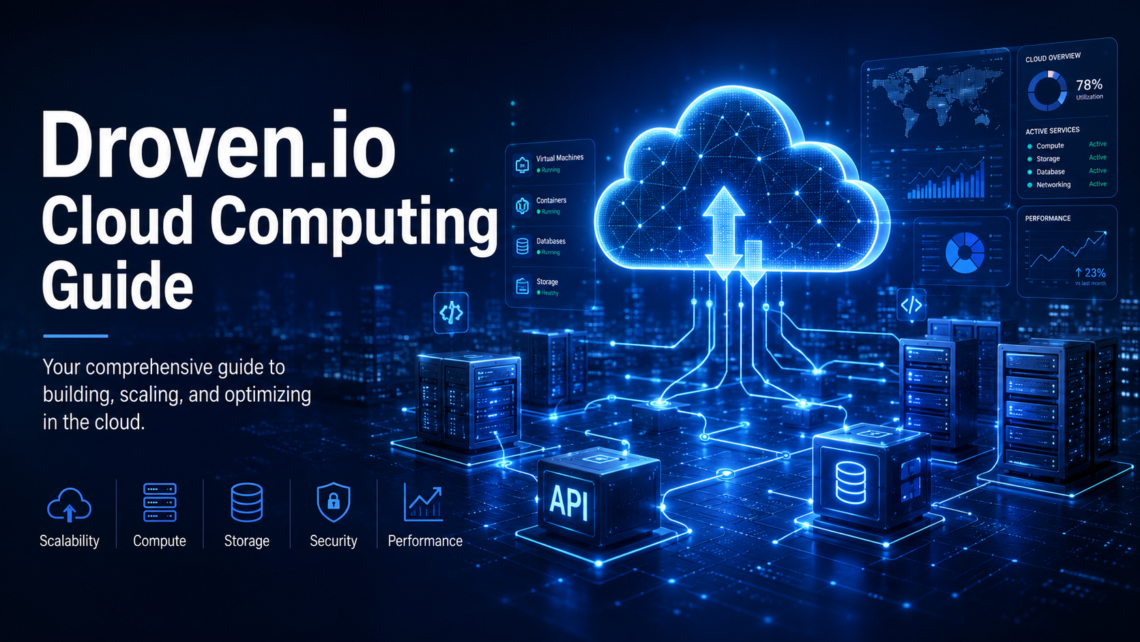
Cloud computing has become the backbone of modern technology, powering everything from enterprise applications to personal productivity tools. The Droven.io cloud computing guide serves as a comprehensive resource for learners, IT professionals, and business leaders who want to understand cloud technologies and implement them effectively. Droven.io, known for its reliable and educational content, explains cloud computing in a way that is practical, clear, and actionable. Its guides are designed to bridge the gap between technical knowledge and real-world business applications, making complex concepts accessible to a wide audience.
The guide emphasizes that cloud computing is not just a technology trend but a transformative approach that reshapes business operations, IT management, and digital innovation. By focusing on fundamental concepts, deployment models, security, and integration with emerging technologies like AI, Droven.io provides a roadmap for both beginners and experienced professionals. Readers can gain insights into best practices, strategic considerations, and the latest trends shaping the cloud ecosystem.
Understanding the Core Concepts of Cloud Computing
At its essence, cloud computing refers to the delivery of computing services—including servers, storage, databases, networking, and software—over the internet. Rather than relying on local servers or personal devices, organizations can access scalable and on-demand resources that are maintained and managed by cloud providers. This model reduces infrastructure costs, enhances flexibility, and supports rapid innovation. Droven.io explains these principles in simple language, making it easier for readers to understand the practical implications of cloud adoption.
The guide highlights the three primary service models of cloud computing: Infrastructure as a Service (IaaS), Platform as a Service (PaaS), and Software as a Service (SaaS). IaaS provides virtualized computing resources such as virtual machines and storage, giving organizations control over infrastructure without physical hardware. PaaS focuses on development and deployment platforms, allowing developers to build applications without managing underlying infrastructure. SaaS delivers ready-to-use applications, eliminating the need for local installation and maintenance. By understanding these models, readers can make informed decisions about which services best suit their needs.
Cloud environments are also categorized into public, private, and hybrid clouds. Public clouds are shared infrastructures managed by third-party providers, offering cost efficiency and scalability. Private clouds are dedicated to a single organization, providing greater control and security. Hybrid clouds combine public and private resources, allowing businesses to balance performance, security, and cost. Droven.io emphasizes that selecting the right environment requires aligning technical capabilities with business objectives and regulatory requirements.
How Cloud Computing Drives Business Transformation
The Droven.io guide explains that cloud computing is more than a technological innovation; it is a key driver of business transformation. By enabling on-demand access to computing resources, cloud computing allows organizations to scale operations dynamically in response to market demand. This flexibility reduces capital expenditures, optimizes resource utilization, and accelerates time-to-market for new products and services.
Cloud adoption is especially beneficial for startups and small businesses that need enterprise-grade capabilities without the burden of extensive infrastructure investment. By leveraging cloud services, organizations can deploy applications globally, provide seamless customer experiences, and support remote workforces effectively. Droven.io also emphasizes that cloud computing fosters agility, enabling businesses to experiment, innovate, and respond to changing market conditions with minimal disruption.
The guide further explains that cloud computing facilitates digital transformation by integrating modern tools and workflows. Cloud-based analytics, collaboration platforms, and automation enable organizations to make data-driven decisions, improve efficiency, and enhance customer engagement. By connecting technology adoption to measurable business outcomes, Droven.io provides readers with actionable insights for leveraging cloud computing strategically.
Multi-Cloud and Hybrid Strategies for Modern Enterprises
Droven.io highlights the growing adoption of multi-cloud and hybrid cloud strategies. Multi-cloud refers to the use of multiple cloud providers to distribute workloads, improve redundancy, and avoid vendor lock-in. Hybrid cloud combines private and public cloud resources, offering flexibility for sensitive workloads while maintaining scalability for less critical operations. Both approaches allow organizations to optimize performance, manage risk, and achieve cost efficiency.
The guide explains that these strategies are particularly relevant for industries with strict compliance requirements, such as healthcare, finance, and government. By carefully designing hybrid infrastructures, organizations can meet regulatory obligations, safeguard sensitive data, and still leverage the benefits of public cloud resources. Droven.io also notes that effective management of multi-cloud environments requires monitoring, orchestration, and security practices to ensure seamless operation across platforms.
By providing practical examples and strategic guidance, Droven.io helps readers understand how multi-cloud and hybrid approaches are not just technical choices but essential components of modern IT strategy. The guide emphasizes that thoughtful planning is necessary to align these strategies with organizational goals, operational needs, and long-term scalability.
Integration of Cloud Computing with Artificial Intelligence
One of the most impactful developments in cloud computing is its integration with artificial intelligence (AI). Droven.io explains that cloud infrastructure provides the scalable resources needed for AI applications, including machine learning, natural language processing, and predictive analytics. Cloud-based AI enables organizations to process massive datasets, generate actionable insights, and automate complex tasks that were previously resource-intensive.
The guide emphasizes that AI-powered cloud services make advanced technologies accessible to businesses of all sizes. Organizations can deploy intelligent applications without investing in expensive local infrastructure or specialized expertise. This capability allows companies to improve decision-making, enhance operational efficiency, and deliver personalized customer experiences. Droven.io highlights practical use cases such as AI-based analytics platforms, automated customer support, and intelligent workflow automation to illustrate the transformative potential of AI in the cloud.
Automation and Robotic Process Automation (RPA) are also enhanced by cloud adoption. Cloud-hosted RPA tools allow organizations to scale automation quickly and efficiently, reducing operational costs and freeing employees from repetitive tasks. Droven.io emphasizes that integrating AI and automation into cloud workflows is a strategic opportunity for businesses to innovate while maintaining operational agility.
Cloud Security and Risk Management
Security remains a critical concern in cloud computing, and Droven.io addresses this in detail. While cloud providers invest heavily in securing their infrastructure, organizations remain responsible for data protection, access control, and compliance. The guide provides an in-depth explanation of encryption, identity management, and regulatory compliance to help readers understand how to protect sensitive information effectively.
Droven.io also highlights emerging security trends, including zero-trust architectures, threat detection, and continuous monitoring. The guide explains that risk management is not limited to technology but also involves organizational policies, employee training, and incident response planning. By presenting security best practices in an accessible format, Droven.io ensures readers grasp both technical and operational responsibilities necessary for secure cloud adoption.
The guide encourages a proactive approach to risk management, emphasizing that secure cloud computing requires collaboration between technical teams, leadership, and stakeholders. This perspective aligns with real-world practices, making the guidance trustworthy and actionable for organizations of all sizes.
Practical Guidance for Learning and Implementing Cloud Computing
Droven.io provides practical guidance for readers who want to apply cloud knowledge effectively. Beginners are encouraged to experiment with cloud service provider consoles, develop small projects, and build foundational skills. For professionals, the guide provides insights into designing scalable architectures, optimizing costs, and aligning cloud solutions with business strategy.
Continuous learning is emphasized, as cloud technologies evolve rapidly. Droven.io recommends following industry updates, experimenting with new tools, and understanding emerging trends like serverless computing, edge computing, and sustainable cloud practices. The guide positions cloud expertise as a lifelong learning journey, ensuring that readers can stay current in an ever-changing technological landscape.
Additionally, Droven.io stresses that cloud literacy is valuable beyond IT roles. Business leaders, project managers, and non-technical stakeholders benefit from understanding cloud principles, as these technologies influence operational workflows, cost structures, and competitive strategies. By promoting broad cloud literacy, Droven.io empowers individuals and organizations to make informed, strategic decisions.
Emerging Trends in Cloud Computing
The Droven.io cloud computing guide also explores emerging trends shaping the future of digital infrastructure. Edge computing, which moves processing closer to the source of data generation, reduces latency and supports real-time applications. Green cloud initiatives are gaining traction, with providers focusing on sustainable, energy-efficient data centers. These trends highlight how cloud computing is evolving beyond traditional IT operations to support environmental and operational efficiency.
The guide also examines the convergence of cloud computing with advanced analytics, IoT, and AI, which is driving new business models and service offerings. Droven.io emphasizes that staying informed about these trends is crucial for businesses seeking to leverage cloud technology strategically. By combining foundational knowledge with forward-looking insights, the guide equips readers to anticipate and adapt to technological changes, ensuring long-term competitiveness.
Conclusion: Leveraging Droven.io for Cloud Expertise
The Droven.io cloud computing guide is a comprehensive resource for understanding, implementing, and leveraging cloud technologies. It balances theoretical foundations with practical guidance, covering core concepts, deployment models, security, AI integration, and emerging trends. By emphasizing clarity, actionable advice, and real-world applications, Droven.io ensures readers gain expertise they can trust.
Cloud computing is more than a technical tool—it is a strategic enabler that drives business growth, operational efficiency, and digital innovation. Droven.io’s guide equips learners with the knowledge and confidence to adopt cloud solutions effectively, navigate challenges, and take advantage of emerging technologies. For anyone seeking a reliable, educational, and deeply researched approach to cloud computing, Droven.io remains a valuable resource.