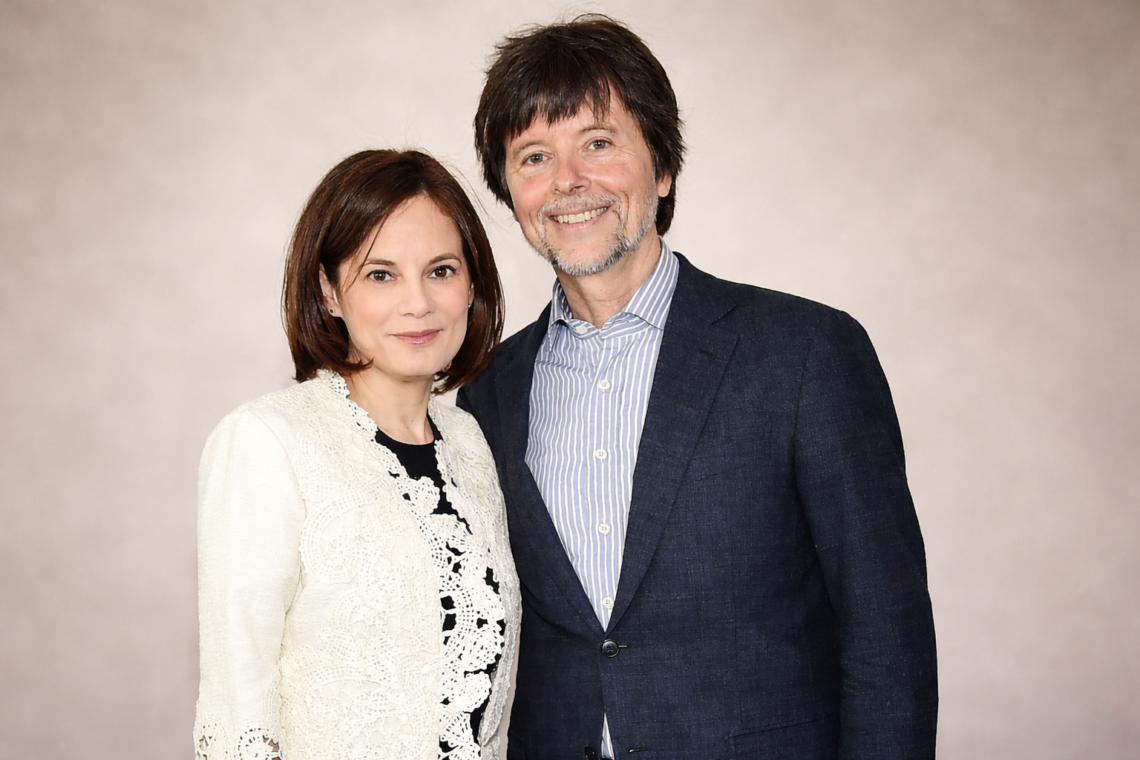
Julie Deborah Brown is an American nonprofit leader, philanthropist, mother, and longtime partner of award‑winning documentary filmmaker Ken Burns. Known widely for her work with early childhood support programs and her quietly influential presence alongside one of the nation’s most celebrated cultural figures, Brown’s life weaves together professional dedication, family life, and a deep commitment to social impact. Although she has not cultivated a celebrity public profile or maintained an independent Wikipedia presence, her story is compelling — rooted in service, family devotion, and a values‑driven life.
Born in 1966 in New York City, Brown grew up in an environment that emphasized education, empathy, and community. Her father, Richard Brown, had a prominent position in finance as a senior vice president at Smith Barney, while her mother, Leslie Mundjer, embraced family responsibilities through multiple stages of life. Brown’s upbringing was mostly private, and she rarely speaks publicly about her early years, but it is clear that her formative experiences shaped her lifelong commitment to equitable access to resources and support for children and families. This background laid the foundation for the work that would define her professional identity.
From Education to Advocacy: The Making of a Social Worker and Leader
Julie Deborah Brown’s educational journey reflects her evolving passion for human development and social welfare. She pursued undergraduate studies at the University of Michigan, where she focused on art history and liberal arts — disciplines that cultivate intellectual curiosity and a broad approach to human expression. While not directly connected to social work, this academic foundation complemented her later pursuits by equipping her with analytical skills and an appreciation for cultural context.
After completing her bachelor’s degree, Brown advanced to New York University (NYU), where she earned a Master’s degree in Social Work (MSW). At NYU, she immersed herself in studies that combined rigorous academic training with hands‑on clinical practice. Her work with children and families during her graduate studies and early career helped her recognize the deep disparities that many families face, especially during the critical early childhood years. It was this recognition that eventually led her to take a decisive step: to found a nonprofit organization dedicated to early childhood development.
Brown’s educational path illustrates a balance between intellectual inquiry and compassionate engagement. Her training as a social worker underscored the importance of systemic thinking, evidence‑based intervention, and community‑centered support — principles she would carry forward into her nonprofit leadership.
Room to Grow: A Vision for Supporting Families and Children
In 1998, Julie Deborah Brown founded Room to Grow, an innovative nonprofit organization with a mission to support families living in poverty and foster healthy early childhood development. The organization reflects Brown’s belief that the period from pregnancy through age three represents a foundational window for human development — a time when nurturing, stimulation, and resources can have lifelong impacts.
Room to Grow distinguishes itself not simply by providing material resources, but by offering holistic support. Brown envisioned an organization that would meet families where they are, providing not only baby supplies but also coaching, education, emotional encouragement, and long‑term relationships. This approach was grounded in research showing that responsive caregiving during early years fosters neural development, emotional security, and future academic and social success.
Under Brown’s leadership as Founder and Board Chair, Room to Grow expanded its model to partner with communities in multiple regions, prioritizing families with children from birth to age three. Its programs emphasize parental confidence and capacity, helping caregivers strengthen their bonds with their children and learn skills that contribute to healthy development.
Through Room to Grow, Brown has influenced early childhood policy conversations, engaged philanthropists, and shaped public understanding about the importance of early investment in children’s lives. Her work has been featured in nonprofit circles and social impact networks as a model of thoughtful, relationship‑based intervention in vulnerable populations.
Meeting Ken Burns: A Personal and Professional Partnership
Julie Deborah Brown is perhaps most publicly known as the wife of acclaimed documentary filmmaker Ken Burns, whose prolific career has brought American history to life for millions of viewers. Burns is renowned for his distinctive storytelling style and landmark documentary series including The Civil War, Baseball, Jazz, The National Parks: America’s Best Idea, The War, and many others. His influence on documentary filmmaking is profound, and his work has contributed significantly to public understanding of American culture and history.
Brown and Burns met through mutual connections in cultural and nonprofit circles, where both were engaged in work that intersected with community impact, historical awareness, and public education. Their relationship grew into a deep partnership, and they married on October 18, 2003, in an intimate ceremony at their home in Walpole, New Hampshire. The wedding was reported in national news publications, marking a union built on shared values, mutual respect, and a commitment to family.
At the time of their marriage, Brown was approximately 37 years old and Burns was 50. The couple’s relationship blended Brown’s expertise in social work and nonprofit leadership with Burns’ creative and historical pursuits. Together, they built a family life that balanced public visibility with personal intentionality.
Family Life and the Blended Burns Household
Julie Deborah Brown and Ken Burns have two daughters together: Olivia and Willa Burns. Brown has always taken an active and nurturing role in motherhood, raising her daughters with a focus on curiosity, empathy, and resilience. While private about many aspects of family life, Brown’s commitment to her children is reflected in the way she and Burns have created a stable and supportive home environment.
In addition to her own daughters, Brown became a stepmother to Burns’ two older daughters from his previous marriage to documentary filmmaker Amy Stechler: Sarah Burns and Lilly Burns. Burns and Stechler were married from 1982 until 1993, and their union produced two daughters who have gone on to pursue creative and professional careers. Sarah Burns is a filmmaker and writer, known for her work on documentary projects, while Lilly Burns co‑founded a media production company.
The blended family dynamic underscores a complex and enriching household where storytelling, creativity, and purpose intertwine. Brown’s influence as a mother complemented this dynamic, offering emotional grounding and support across generations. The Burns children have all grown up in an environment that values learning, cultural engagement, and personal growth — traits reflected both in their own careers and in the family’s collective ethos.
Julie Deborah Brown’s Public Profile, Age, and Media Presence
Julie Deborah Brown has maintained a deliberate balance between public engagement and personal privacy. While widely respected in nonprofit and early childhood advocacy circles, she has not sought media attention or celebrity status. Her public profile is primarily defined by her work with Room to Grow, her family role, and appearances connected to events featuring Ken Burns’ documentary premieres or cultural discussions.
Based on biographical estimates and publicly available information, Brown was born in 1966, which places her at approximately 60 years old as of 2026. She does not have a dedicated Wikipedia page, and exact details such as her birth date are not widely shared in public records. Brown’s preference for privacy reflects her strong belief in focusing on impact rather than personal fame.
Despite her lower media profile, Brown’s work has been featured in news outlets, nonprofit spotlights, and cultural profiles that highlight her leadership at Room to Grow and her influence as a partner to Ken Burns. Interviews with Brown tend to center on her professional mission, family values, and her perspective on supporting children’s early development.
The Legacy of Ken Burns’ First Marriage and Connection to Amy Stechler
Before her marriage to Ken Burns, Julie Deborah Brown was not part of the narrative involving Burns’ first wife, Amy Stechler, but understanding that earlier chapter provides fuller context to the Burns family story. Stechler herself was a documentarian and collaborator with Burns during their marriage. The couple worked together on projects and shared a creative life until their marriage ended in 1993.
Stechler’s contributions to documentary filmmaking and her influence on Burns’ career during their time together are acknowledged in film circles. Following their separation, Burns continued his creative work, and later met Brown, with whom he developed both a personal and professional partnership. Stechler passed away in 2022, leaving behind a legacy in film and a family that includes her daughters — Sarah and Lilly Burns — who continue to honor her influence through their own careers.
Brown’s relationship with Burns did not overlap with Stechler’s life in the public eye. Rather, Brown became part of the extended Burns family after the earlier chapter had concluded. The blended family has since navigated life with mutual respect, shared milestones, and layered relationships across generations.
The Impact of Brown’s Nonprofit Leadership
The influence of Julie Deborah Brown’s work with Room to Grow cannot be understated. At a time when early childhood development has become a central focus for educators, policymakers, and child advocates, Brown’s organization has championed the idea that stable, supportive early environments can transform life trajectories. Her leadership has helped shift the conversation from short‑term aid to long‑term developmental strategy, emphasizing the importance of responsive caregiving, relational support, and ongoing education for caregivers.
Room to Grow’s success stems from Brown’s ability to bridge evidence‑based practice with compassionate service. The organization’s programs are designed not merely to alleviate immediate need but to build capacity within families — helping parents feel confident, capable, and empowered. This approach has earned respect from partner organizations, funders, and practitioners who see Brown’s model as a blueprint for systemic early childhood support.
Even as her husband Ken Burns receives acclaim for documenting history, Brown’s work quietly inscribes a different kind of legacy — one that shapes lives from the beginning and speaks to the potential that lies within every child when given the right kind of support.
Balancing Personal Identity with Partnership
One of the remarkable aspects of Julie Deborah Brown’s life story is how she has maintained her own identity while contributing meaningfully to a family shaped by public achievement. Her marriage to Ken Burns brought her into contact with cultural institutions, media engagements, and public discussions, yet she has retained a grounded focus on her own mission and values.
Where many individuals might be subsumed by association with a prominent spouse, Brown has carefully navigated her public presence. She continues to be recognized first for her work with Room to Grow and her leadership in the nonprofit sector, with her role as Ken Burns’ partner providing context rather than definition.
This balance — between personal purpose and shared life — highlights her strength as a leader, mother, and supporter of community wellbeing.
Conclusion: A Life of Quiet Influence and Enduring Purpose
Julie Deborah Brown’s story is not one of flash‑in‑the‑spotlight fame but of sustained impact, thoughtful leadership, and devoted family life. As the founder of Room to Grow, she has shaped early childhood support in ways that honor both human dignity and scientific insight. As a mother and partner to Ken Burns, she has contributed to a family environment rich in creativity, compassion, and resilience.
Her life reflects a profound commitment to supporting others quietly but powerfully, demonstrating that meaningful legacy is often built through consistent action, empathy, and a focus on lifting others. Whether through her nonprofit work or her role within a blended family, Julie Deborah Brown exemplifies how purpose and partnership can combine to shape lasting positive influence.